

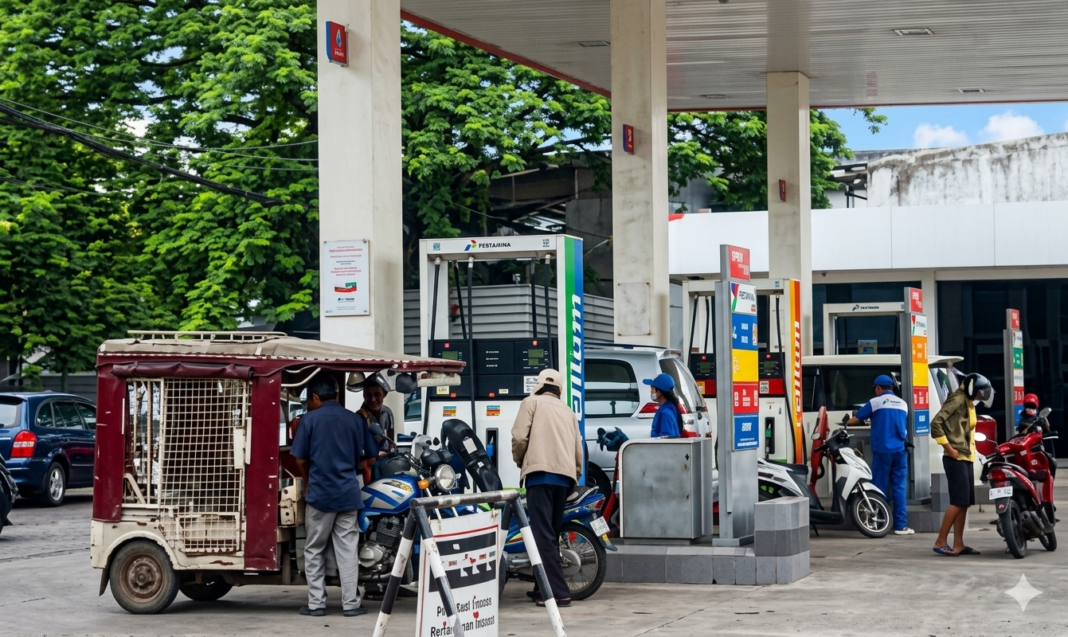

PHNOM PENH— Fuel stations across Cambodia have begun implementing Value Added Tax (VAT) in accordance with government regulations, marking a significant step toward strengthening tax compliance in the petroleum sector. This rollout comes shortly after the Royal Government reduced the VAT rate on regular gasoline and diesel from 10% to 4%, effective March 20, 2026, as part of efforts to shield consumers from rising global oil prices.
The government is currently absorbing the remaining 6% of the VAT to cushion the impact of global energy volatility. Following the tax reduction, regulated retail prices have been set at 5,400 riel (approximately $1.35) per liter for regular gasoline and 6,700 riel (approximately $1.67) per liter for diesel, helping stabilize transport and logistics costs across the country.
According to officials from the General Department of Taxation (GDT), the enforcement of VAT at fuel stations aims to enhance transparency, improve revenue collection, and ensure fair business practices within the fuel distribution industry. The initiative is part of broader efforts to modernize Cambodia’s tax system and promote greater fiscal accountability.
Authorities stated that the VAT implementation applies to all fuel station operators nationwide. Businesses are required to issue proper tax invoices and comply with Cambodia’s national e-invoicing platform, known as CamInvoice. The system is being rolled out in phases, with 2026 marking the beginning of mandatory adoption for private-sector taxpayers, including fuel station operators.
Under the clearance model, invoice data must be transmitted to the General Department of Taxation (GDT) in real time at the point of sale, generating a valid QR code for each transaction. Authorities say the system will enhance transparency, reduce tax evasion, and modernize Cambodia’s fiscal infrastructure.
Officials also noted that most fuel station operators have shown cooperation in adopting the new tax requirements. Training and technical support have been provided to facilitate the transition, particularly in the use of digital systems such as e-Filing and electronic invoicing.
The VAT policy is expected to contribute significantly to national revenue while ensuring a level playing field for all fuel distributors. Consumers may notice slight adjustments in fuel prices due to the tax inclusion, although authorities stress that the measure is necessary for long-term economic stability and governance improvements.
The enforcement of VAT compliance comes amid heightened global energy volatility. International oil prices have recently surged above $90 per barrel for gasoline and $100 for diesel, placing pressure on import-dependent economies such as Cambodia. In addition to the VAT reduction, the government continues to maintain a 6.5-cent-per-litre subsidy to stabilize domestic fuel prices. Officials have also warned that Cambodia’s fuel reserves currently cover less than 30 days of supply, underscoring the importance of strict regulatory oversight in the petroleum sector.
The combined measures, VAT reduction, digital tax enforcement through CamInvoice, and continued fuel subsidies, reflect Cambodia’s broader strategy to balance fiscal discipline with economic stability during a period of global energy uncertainty. While consumers may experience only modest price adjustments in the short term, the reforms are expected to improve transparency, strengthen public revenue, and support long-term economic resilience.