

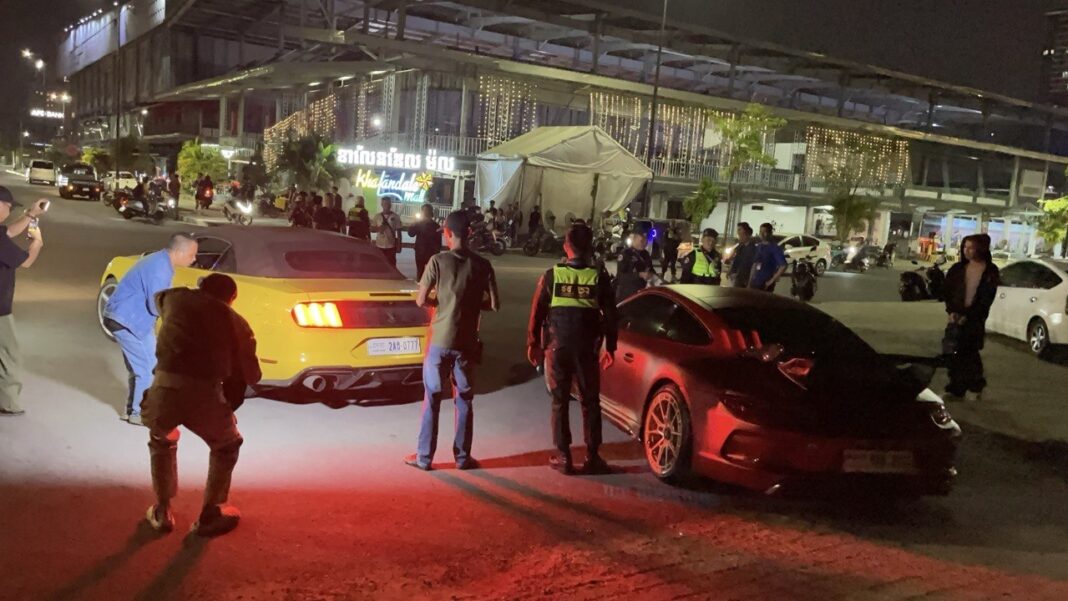

PHNOM PENH — If you’ve driven through Boeung Kak, BBK1 or Riverside recently you’d may have noticed uniformed officers with flashlights in hand systematically conducting late night vehicle checks. What may feel like a temporary inconvenience is, in fact, part of a broader policing shift in the capital.
Shortly after midnight on March 21, Phnom Penh Municipal Gendarmerie, in coordination with Daun Penh district authorities, launched a targeted crackdown on illegally modified motorcycles and cars in the Boeung Kak area.
During the operation, officers seized 11 motorcycles and 2 cars equipped with non-compliant exhaust systems. The vehicles were taken to the municipal gendarmerie headquarters for further processing under Cambodian traffic and public order regulations.
Authorities say the operation aims to curb excessive nighttime noise, illegal street racing, and public disturbances caused by modified exhaust systems, a growing complaint among residents in central Phnom Penh.
As Phnom Penh continuously develops, so must its approach to public order. This increase in enforcement marks a critical turning point for the city.
For years, policing in many urban centers was reactive. The officers would arrive after a crime occurred; the new strategy aims to address problems at their source through highly visible tactics. They target drunk driving and illegal street racing, reclaiming public space and preventing avoidable accidents. They also aim to increase public trust towards law enforcement and shift focus from reaction to prevention.
With crime prevention measures put in place it will drive up investment and tourism, providing a safety net for local businesses.
While the checkpoints mainly prioritize street-level issues such as weapons and drugs, they also are a part of a broader campaign to push against the city’s sophisticated threats including online scam networks and human trafficking. Their operation puts pressure for the city to coordination nationwide security efforts that drives away organized crime from the city.
Enforcement within the city has undoubtedly increased. As Cambodia’s capital continues to grow, nighttime operations are the growing pains of the city balancing urban mitigation with a sustainable sense of order.