

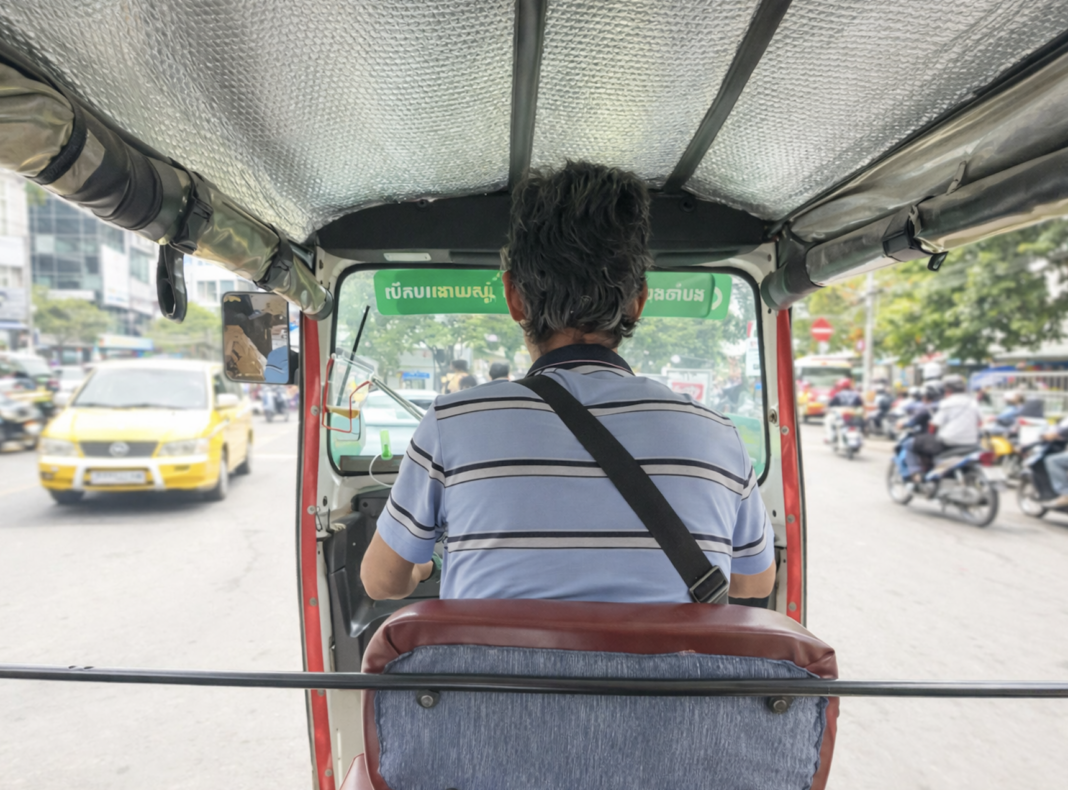

On a recent afternoon, I booked a ride to the store using an in-app promotion.
Four kilometers. 10,600 riel. Smooth trip.
For me, it’s a convenience. Saves me the trouble from haggling for one myself.
For the driver, it was another line in a very long day.
His day starts on the road at 8:00 AM, his day ends at 10:00 PM.
Fourteen hours.
By the time I stepped out, I asked him: How many trips do you need in a day to make it worthwhile?
He laughed.
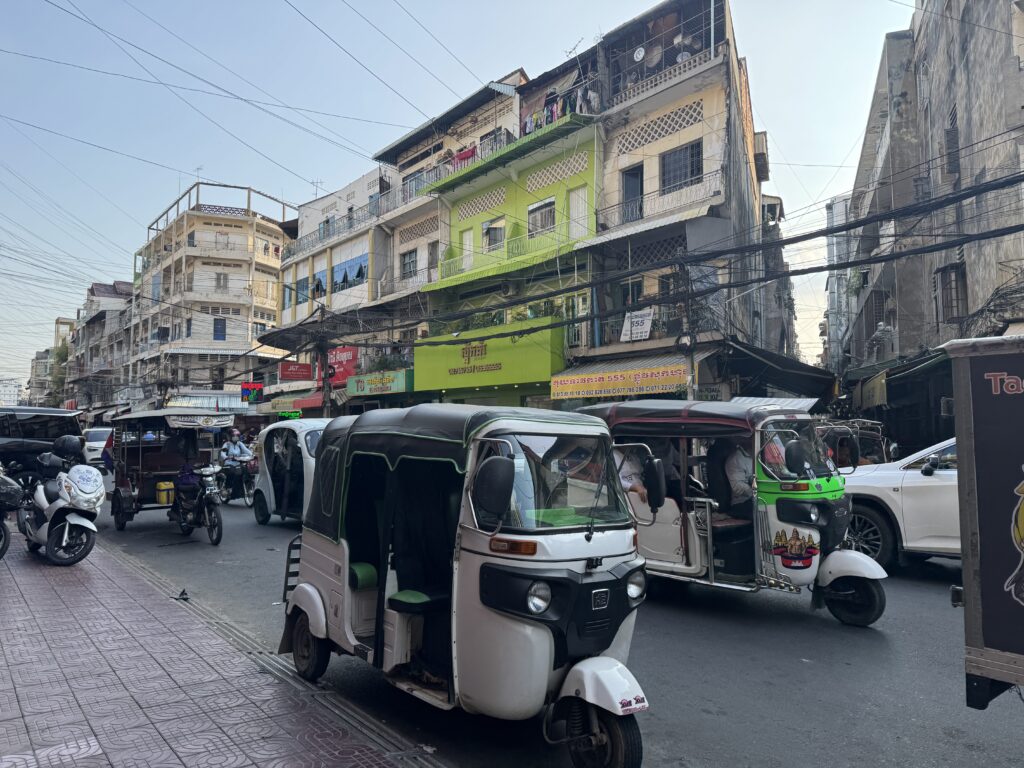
The 14-hour equation. A typical day would look like this:
- 24 to 30 rides on average
- 35 to 40 rides on peak days
- Net earnings per ride: around $0.50 to $0.70
At first glance, the math looks reasonable. 40 rides x $0.70 = $28. But that number exists only on paper. Because their earnings don’t account for fuel, electricity, rental, maintenance, or daily vehicle payment.
Many drivers report daily operating costs between $20 and $30. If we subtract that from $28, what remains? Roughly 30,000 to 40,000 riel. That’s around $7.50 to $10 in a 14-hour shift.
To survive, drivers don’t just drive. They actively chase targets to fill their daily quota.
20 completed trips unlock bonus eligibility. 30 trips for higher tier. 40 trips for meaningful increments.
This isn’t just driving passengers from Point A to B. It is an algorithm they must endure by day.
And when more drivers enter the platform, the race becomes harder. Meanwhile at corporate level, regional ride-hailing companies such as Grab are reporting growth.
Grab’s February 2026 investor update shows:
• On-demand GMV up 21% year-on-year
• Group revenue up 19%
• First full year profit achieved in 2025
• 2026 revenue projected above $4 billion
The company highlights “improving affordability and reliability” as a strategic priority. And indeed, average trip fares across the Southeast Asian board have increased compared to 2021. But the same presentation shows driver earnings per online hour indexed lower versus 2021 levels.
Growth is real. Profitability is real. However, we see that income pressure at the driver level still exists. Especially in smaller markets where supply may be expanding faster than demand.
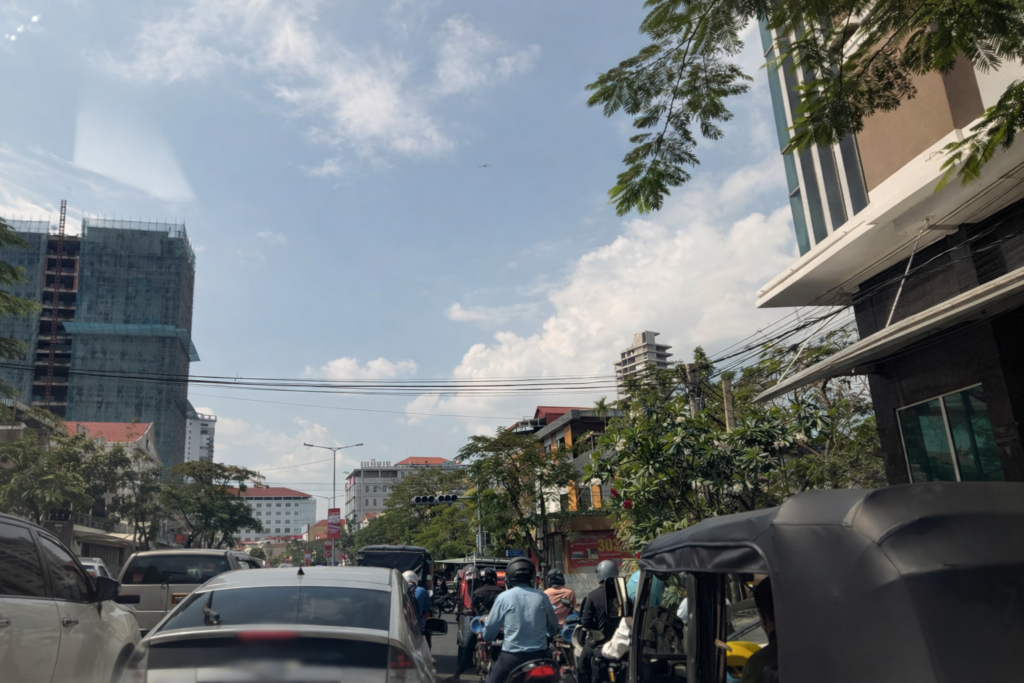
Since mid-2025, Cambodia has absorbed a significant number of returning workers from Thailand.
Ride-hailing apps offers low barrier to entry, immediate earning opportunity, flexible hours, and no formal hiring process. Therefore, when the number of drivers increases faster than the number of passengers, each driver’s slice becomes thinner.
Simply put, no algorithm can fully fix basic supply and demand.
Electric vehicles are marketed as cost savers. Lower fuel. Lower maintenance. But drivers say daily charging costs still run high. And installment payments add pressure.
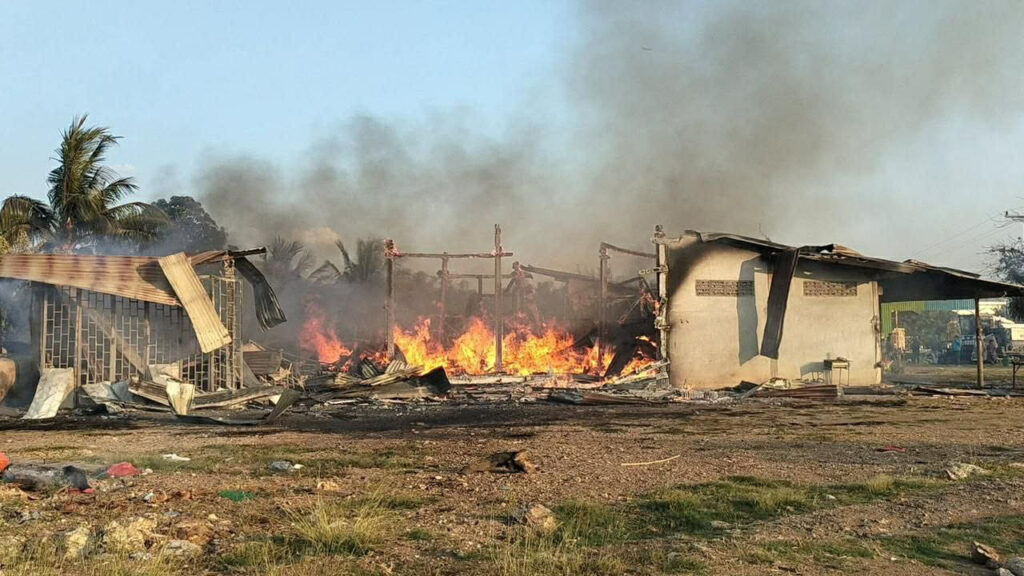
This week, fear over rising oil prices had taken a tragic turn in Battambang.
A police officer reportedly brought 30 containers of diesel fuel, nearly 900 liters, and stored them inside his home. It’s not hard to imagine most others doing the same – worried that prices will continue to climb. Days later, a fire broke out.
His house was destroyed.
Estimated losses: 160 million riel.
Local authorities have not confirmed the exact cause. But we can speculate that the presence of stored fuel made it impossible to contain.
The Government has since then tried to calm the public, urging citizens not to panic and to stop hoarding fuel. Officials reassured the public that supply remains stable.
However, their policy announcements do not stop the public from worry.
And for drivers, whose daily income depends entirely on fuel prices, every rumor about oil becomes personal.
The recent agreement to cap commission at 12% and restore 1,200 riel per kilometer may ease pressure. But drivers say the new pricing has yet to appear in their system.
In digital platforms, agreements must become code. Until then, tension remains psychological.
As passengers, we benefit from discounts, campaigns, and free ride coupons – it’s all a digital process to incentivize passengers to book trips. But somewhere down the chain, someone absorbs the pressure.
Corporate reports talk about scale, ecosystem, cross-sell, and lifetime value.
Drivers talk about hitting 30 rides before sunset.
Both realities exist at the same time.
If oil rises, operating costs rise immediately.
An extra 1,000 riel per liter may not sound dramatic on paper. But across a 14-hour shift? Across weeks, across months – it all adds up.
Some drivers now quietly ask:
If fuel rises again, can we still survive on 30,000 to 40,000 riel a day?
Even if their commissions are capped but costs increase, what then?
If promotions continue, what difference does it make from their last commission.
There is no one clear answer.

Ride-hailing once felt like an opportunity.
Flexible. Independent. Immediate income.
Nowadays, some drivers describe it differently.
Uncertain. Competitive. Fragile.
When the city worries about oil, when workers return from abroad, when supply increase, when margins shrink, the steering wheel feels heavier.
Next time you book a short ride during a promotion, remember the person in the front seat isn’t just getting you to your destination while navigating traffic.
At the end of the day, he will have to calculate his daily kilometers, milestones, battery percentage, and whether today will cross 40,000 riel.
While that ride may have costed you $2.65, it has costed the driver 14 hours and tomorrow, perhaps, a little more if the oil rises again.